Building a Digital Classroom: Why an Online Course PSD Template Is the Foundation of Modern Education
In the rapidly evolving landscape of digital education, the visual presentation of your content is just as critical as the curriculum itself. Whether you are running a small tutoring service, a large university, or a specialized training center, your website serves as the primary interface between your institution and your students. This is where the concept of an Online Course PSD Template becomes invaluable. While many educators focus heavily on video quality and lesson plans, the underlying design structure—often starting with a Photoshop (PSD) file—dictates user experience, engagement, and ultimately, enrollment rates.
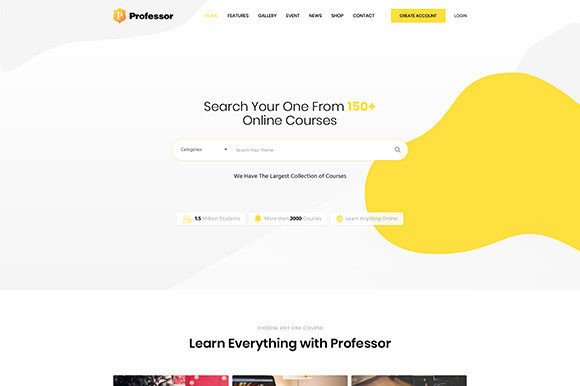
For those unfamiliar with web development workflows, a PSD template is a pre-designed graphic file created in Adobe Photoshop. It acts as the visual blueprint for a website. When this template is specifically tailored for an Education LMS WordPress theme, it provides a comprehensive design system that powers everything from school portals to complex course marketplaces. Understanding how these templates function and why they are essential can transform how you approach building your educational platform.
The Role of Design in E-Learning Success
Education is no longer confined to physical classrooms. Today, an e-learning system must compete for attention in a crowded digital marketplace. A well-structured design ensures that users can navigate your learning academy intuitively. If a potential student lands on your site and finds it cluttered, slow, or confusing, they are likely to leave before exploring your courses. This is known as "bounce rate," and it is a metric that directly impacts your business viability.
An Online Course PSD Template addresses this by offering a professionally crafted layout that has already been optimized for user experience (UX). These templates are not just pretty pictures; they are strategic arrangements of elements designed to guide the user’s eye. For instance, clear call-to-action buttons for "Enroll Now" or "View Curriculum" are placed prominently. Testimonials, instructor bios, and course previews are organized in a way that builds trust and authority.
Bridging the Gap Between Vision and Functionality
One of the most significant advantages of starting with a high-quality PSD template is the clarity it brings to the development process. For educational institutions, such as universities or training centers, branding is paramount. You need your digital presence to reflect the prestige and reliability of your physical institution. A generic theme often fails to capture unique brand identities. However, a customizable PSD template allows designers to tweak colors, fonts, and layouts to match your specific branding guidelines before a single line of code is written.
This separation of design and development is crucial. It allows stakeholders—such as school administrators or course creators—to visualize the final product early in the process. They can provide feedback on the look and feel without worrying about technical constraints. Once the design is approved, developers can convert the PSD into a fully functional Education LMS WordPress theme. This workflow reduces errors, saves time, and ensures that the final website looks exactly as intended.
Versatility Across Educational Sectors
The beauty of a robust Online Course PSD Template lies in its versatility. It is not limited to one type of educational model. Let us explore how different sectors can leverage this resource:
- Schools and Universities: These institutions require complex structures that handle student portals, faculty directories, and event calendars. A comprehensive template provides the necessary pages and components to manage this complexity without overwhelming the user.
- Tutoring and Coaching Services: Individual tutors need a personal touch. Templates often include sections for personal bios, scheduling integration, and one-on-one session bookings, making it easier for freelancers to professionalize their services.
- Course Marketplaces: Platforms like Udemy or Coursera rely on multi-vendor capabilities. A well-designed template includes layouts for vendor dashboards, commission structures, and diverse course categories, enabling entrepreneurs to build their own niche marketplaces.
- Corporate Training Centers: Businesses using e-learning for employee upskilling need clean, corporate-friendly designs. These templates often feature minimalist aesthetics that align with professional environments, focusing on certification tracking and progress monitoring.
By choosing a template designed specifically for educational services, you ensure that the necessary features are not afterthoughts but integral parts of the design. This includes dedicated spaces for video players, quiz interfaces, and certificate downloads.
Common Misconceptions About PSD Templates
Despite their benefits, there are several misunderstandings regarding PSD templates that often deter beginners. Clarifying these can help you make a more informed decision.
Misconception 1: You need to be a graphic designer to use them.
While the source file is in Photoshop, you do not necessarily need to edit the PSD yourself if you are hiring a developer. The PSD serves as the handoff document. However, if you have basic design skills, you can easily swap out images or change color schemes to suit your preferences before handing it off for coding.
Misconception 2: They are rigid and unchangeable.
On the contrary, PSD files are layered and highly editable. Unlike a finalized HTML page, a PSD allows for infinite experimentation. You can move elements, change typography, and adjust spacing with ease. This flexibility is vital for educational brands that may pivot their marketing strategy or update their visual identity.
Misconception 3: They are outdated in the age of page builders.
While drag-and-drop builders are popular, they often result in bloated code and inconsistent designs. Starting with a PSD ensures a custom, lightweight, and unique design that stands out from the thousands of websites using the same pre-made WordPress themes. It combines the uniqueness of custom design with the efficiency of a template.
Integrating with WordPress and LMS Plugins
The ultimate goal of an Online Course PSD Template is to become a live, functioning website. This is typically achieved by converting the design into an Education LMS WordPress theme. WordPress is the leading content management system for education due to its flexibility and extensive plugin ecosystem. When your PSD is converted into a WordPress theme, it integrates seamlessly with Learning Management System (LMS) plugins like LearnDash, LifterLMS, or Tutor LMS.
This integration is where the magic happens. The static design elements from the PSD—such as course grids, instructor profiles, and student dashboards—become dynamic. They pull real-time data from your database. For example, when a student completes a module, the progress bar designed in the PSD updates automatically. When a new course is added, it appears in the designated layout without requiring manual HTML edits.
For those managing a learning academy or training center, this means less technical maintenance and more focus on teaching. The heavy lifting of design and structure is handled by the template, while the LMS handles the pedagogy and user management.
Practical Steps to Getting Started
If you are ready to elevate your educational platform, here is a logical path to follow:
- Define Your Needs: Are you building a simple tutoring site or a complex university portal? Identify the key features you need, such as payment gateways, subscription models, or certificate generation.
- Select a High-Quality PSD Template: Look for templates that offer multiple homepage variations, inner page designs (like contact, about, and blog), and mobile-responsive layouts. Ensure the design aligns with your brand’s tone.
- Customize the Design: Work with a designer to adjust the PSD to your specific branding. Change the logo, adjust the color palette, and replace placeholder images with high-quality photos of your actual instructors and facilities.
- Convert to WordPress: Hire a skilled developer to convert the finalized PSD into a custom WordPress theme. Ensure they optimize the code for speed and SEO.
- Integrate LMS Functionality: Install your chosen LMS plugin and configure your courses. Map the dynamic content to the design elements created in the previous steps.
Conclusion
In conclusion, an Online Course PSD Template is more than just a design asset; it is a strategic tool for building a successful online education business. By providing a solid visual foundation, it ensures that your Education LMS WordPress theme is not only functional but also engaging and professional. Whether you are powering a small tutoring gig or a large-scale course marketplace, investing in a high-quality design template sets the stage for credibility and user satisfaction.
As the demand for flexible, accessible education continues to grow, having a website that reflects the quality of your teaching is non-negotiable. By understanding the role of PSD templates and leveraging them effectively, you can create an educational environment that inspires learning and drives growth. Start with a strong design, and let your content shine.