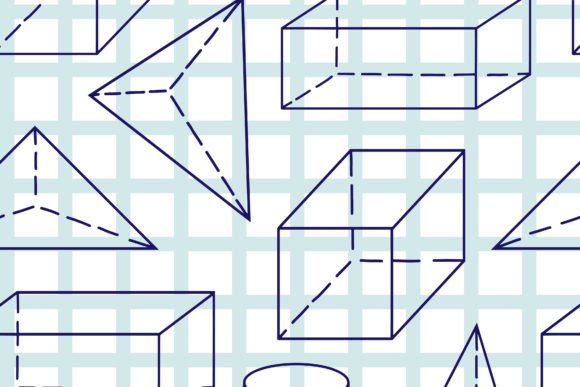
Choosing the Right Seamless Pattern with Geometric Shapes for Design and Education
In the expansive world of digital design resources, finding a versatile asset that bridges the gap between aesthetic appeal and functional utility can be challenging. A seamless pattern with geometric shapes offers a unique solution, particularly when it combines clean mathematical precision with the organic charm of hand-drawn elements. This specific style—often described as a hand-drawn mathematics copybook page illustration—serves multiple purposes, from fabric print templates to digital paper for student notebooks. Understanding the nuances of this format helps designers, educators, and hobbyists make informed decisions about which resources best suit their projects.
Defining the Aesthetic: Precision Meets Organic Charm
At its core, a seamless pattern is a graphic element that repeats indefinitely without visible edges or breaks. When this concept is applied to geometric shapes, the result is usually structured, orderly, and modern. However, the variation discussed here introduces a critical twist: the hand-drawn quality. Unlike vector-perfect lines generated by software, these patterns mimic the look of doodles found in a school education context. This juxtaposition creates a visual language that is both intellectual and approachable.
The distinct value of this style lies in its ability to soften rigid mathematical concepts. For instance, a standard grid pattern might feel cold or industrial, suitable for technical blueprints but less inviting for educational materials. By contrast, a pattern featuring slightly irregular circles, triangles, and squares, rendered in a sketch-like style, evokes nostalgia and creativity. It suggests a workspace where ideas are explored freely, making it an excellent choice for environments that encourage learning and innovation.
Comparing Formats: Raster vs. Vector Resources
When evaluating digital assets, one of the most significant decision factors is the file format. The resource in question is provided as a high-quality JPEG, specifically sized at 12 by 12 inches with a resolution of 3600 by 3600 pixels at 300 PPI (pixels per inch). To understand whether this meets your needs, it is essential to compare raster images like JPEGs with vector formats such as SVG or AI.
- Raster (JPEG/PNG): These files are composed of pixels. The primary advantage of the 300 PPI specification is print readiness. At this density, the image will appear crisp on physical media, such as fabric prints or paper worksheets. However, raster files have a fixed size. Scaling them up beyond their original dimensions results in pixelation and loss of quality.
- Vector (SVG/EPS): Vector files use mathematical paths to define shapes, allowing for infinite scalability without quality loss. They are ideal for large-format signage or logos that need to be resized frequently. However, they can sometimes lack the textured, organic feel of a hand-drawn scan unless complex effects are applied, which can increase file complexity.
For users creating simple wallpaper for students' notebooks or digital backgrounds for tablets, the high-resolution JPEG is often sufficient and easier to implement. Most consumer printers and digital display tools handle 300 PPI images efficiently. If your project requires resizing the pattern to cover a wall mural or a billboard, a vector alternative might be necessary. But for standard craft, educational, and web uses, the provided ZIP folder containing high-quality JPEGs offers a practical balance of quality and ease of use.
Use Cases and Practical Applications
The versatility of a seamless pattern with geometric shapes extends across various industries. Identifying the best-fit situation for this specific hand-drawn style can help maximize its value.
Educational Materials and Stationery
This is perhaps the most natural fit. The "doodle school education" aesthetic aligns perfectly with materials designed for students. Teachers and content creators can use these patterns as background layers for worksheets, presentation slides, or classroom decorations. The geometric nature reinforces math and science themes without being overly sterile. For example, using this pattern as a border for a geometry test can make the document feel more engaging and less intimidating.
Fabric and Textile Design
As a fabric print template, this pattern works well for items that benefit from a playful yet structured look. Think of tote bags, aprons, or children’s clothing. The seamless nature ensures that when the fabric is cut and sewn, the pattern continues naturally across seams. The 12x12 inch tile size is a standard dimension for repeat patterns in textile design, making it compatible with many printing services. However, designers should note that dark fabrics may require adjustments to the color contrast of the JPEG to ensure visibility.
Digital Backgrounds and Web Design
In the digital realm, these patterns serve as effective digital paper. They can be used as backgrounds for websites, blogs, or e-learning platforms. The neutral, hand-drawn style provides texture without distracting from the main content. It is particularly effective for sites related to tutoring, coding bootcamps, or creative workshops. When using these images online, it is crucial to optimize the file size for web loading speeds, even though the source file is high-resolution for print.
Evaluating Limitations and Tradeoffs
While this resource offers significant benefits, it is not a universal solution. Honest evaluation requires acknowledging its limitations.
Color Flexibility: JPEG files are flattened images. Unlike vector files or layered PSDs, you cannot easily change the color of individual geometric shapes within the pattern. If your brand guidelines require specific hex codes, you may need to use image editing software to adjust hues globally, which can sometimes affect the subtle shading of the hand-drawn effect. If you need full color customization, a vector file would be a superior alternative.
Scalability Constraints: As mentioned earlier, the 3600x3600 pixel limit is generous but finite. If you are designing for very large formats, such as trade show backdrops, you might encounter resolution issues. In such cases, consider using the pattern as a texture overlay at a smaller scale rather than stretching it to fit the entire area.
Style Specificity: The hand-drawn, doodle aesthetic is distinctive. While this is a strength for educational and casual contexts, it may not suit corporate, luxury, or minimalist high-end brands that prefer clean, sharp lines. Always consider the tone of your project. If the goal is to convey strict professionalism or luxury, a more refined geometric pattern might be appropriate.
Making the Right Choice for Your Project
Deciding whether to utilize this seamless pattern with geometric shapes depends on your specific requirements. Ask yourself the following questions:
- What is the end medium? If you are printing on paper, fabric, or standard merchandise, the 300 PPI JPEG is ideal. If you are designing for large-scale outdoor advertising, consider if the resolution is sufficient or if you need a vector alternative.
- Do you need color customization? If you need to match exact brand colors, be prepared to spend time editing the image or look for a version that allows layer access.
- Does the aesthetic match your audience? The hand-drawn math copybook style resonates with students, teachers, and creative professionals. It may feel too informal for legal, financial, or high-fashion contexts.
Ultimately, this resource shines in scenarios where approachability and structure need to coexist. It transforms the abstract concept of geometry into something tangible and human. Whether you are creating a simple wallpaper for students' notebook apps or designing a custom fabric line for a school supply store, this pattern offers a ready-made foundation that saves time while maintaining a professional, cohesive look.
By understanding the technical specifications—such as the 12x12 inch tile size and 300 PPI resolution—and recognizing the stylistic implications of the hand-drawn aesthetic, you can integrate this asset effectively into your workflow. It serves as a reminder that even in digital design, the touch of human imperfection can add warmth and relatability, making complex subjects like mathematics feel accessible and engaging.