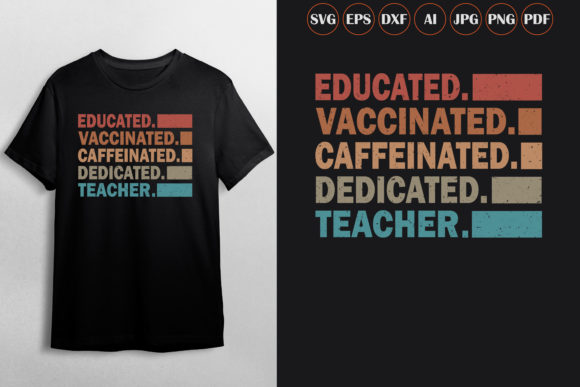
Empowering Educators Through Thoughtful Teacher Education T-shirt Design
In the vibrant ecosystem of modern education, visibility and identity play surprisingly significant roles. While lesson plans and classroom management strategies form the backbone of teaching, the culture surrounding the profession is increasingly expressed through visual mediums. Among these, Teacher Education T-shirt Design has emerged as a powerful tool for community building, professional pride, and advocacy. It is no longer just about wearing a slogan; it is about curating an image that reflects pedagogical values, subject-matter expertise, and the shared experiences of educators.
For designers, print-on-demand entrepreneurs, and educational institutions, understanding the nuances of this niche is essential. The demand extends beyond simple aesthetics into the realm of technical precision. Whether you are creating assets for a university department, a teacher training workshop, or an independent educator’s brand, the quality of your digital files—specifically EPS, SVG, AI, PNG, DXF, JPG, and PDF formats—determines the final product's professionalism and durability. This article explores the intersection of creative design, technical file management, and the evolving culture of teacher education.
The Evolution of Professional Identity in Education
Historically, teacher apparel was often limited to generic university logos or plain polo shirts. However, the landscape has shifted dramatically. Today’s educators are content creators, mentors, and public figures within their communities. They seek apparel that speaks to their specific journey in teacher education. This shift mirrors broader societal trends where professionals use clothing to signal affiliation and values. A well-designed t-shirt can serve as a conversation starter at conferences, a unifying symbol for cohort groups, or a morale booster during challenging academic terms.
The relevance of Teacher Education T-shirt Design lies in its ability to humanize the profession. It moves away from stiff formalwear toward approachable, relatable, and often humorous or inspiring visuals. For those involved in teacher training programs, custom apparel helps foster a sense of belonging among student-teachers who are navigating the complex transition from theory to practice. It creates a visual tribe, reinforcing the idea that they are part of a supportive network dedicated to shaping future generations.
Technical Precision: Why File Formats Matter
While the creative concept is vital, the execution relies heavily on technical proficiency. Many designers new to the print-on-demand space underestimate the importance of providing the correct file types. A beautiful design can look pixelated, distorted, or unprintable if the underlying digital asset is not optimized for production. Understanding the distinct roles of various file formats is crucial for anyone serious about producing high-quality merchandise.
Vector vs. Raster: The Core Distinction
The primary division in digital design is between vector and raster graphics. Vector files, such as SVG (Scalable Vector Graphics), AI (Adobe Illustrator), EPS (Encapsulated PostScript), and DXF (Drawing Exchange Format), are composed of mathematical paths rather than pixels. This means they can be scaled infinitely without losing quality. For t-shirt printing, especially when using vinyl cutters or screen printing methods, vector files are indispensable. They ensure crisp edges and clean lines, regardless of whether the design is printed on a small pocket logo or a large back print.
Conversely, raster files like PNG (Portable Network Graphics) and JPG (Joint Photographic Experts Group) are made of pixels. While useful for certain applications, they have fixed resolutions. If you enlarge a low-resolution JPG, it becomes blurry. However, high-resolution PNGs with transparent backgrounds are excellent for Direct-to-Garment (DTG) printing, where the printer applies ink directly onto the fabric. The transparency allows the design to sit naturally on colored shirts without an unsightly white box around the edges.
Selecting the Right Format for the Job
- SVG and DXF: Ideal for cutting machines like Cricut or Silhouette. These formats allow crafters and small businesses to create custom vinyl decals for shirts easily.
- AI and EPS: The industry standards for professional graphic designers. These files retain editable layers, making them perfect for clients who may want to tweak colors or text before printing.
- PNG: The go-to for web previews and DTG printing. Always ensure these are 300 DPI (dots per inch) for print quality.
- JPG: Best for mockups and marketing materials where transparency is not required. It offers smaller file sizes for faster website loading.
- PDF: Useful for sharing proof sheets or multi-page design portfolios with clients, ensuring fonts and layout remain consistent across different devices.
By offering a comprehensive bundle that includes teacher education t-shirt design EPS SVG AI PNG DXF JPG PDF files, creators cater to a wide range of users. A school administrator might need the AI file for a large order from a professional printer, while a parent-teacher association volunteer might prefer the SVG for a home crafting project. Providing versatility enhances the value proposition and ensures customer satisfaction.
Design Trends Resonating with Modern Educators
Successful Teacher Education T-shirt Design balances wit, wisdom, and aesthetic appeal. Current trends favor minimalism, retro typography, and inclusive imagery. Educators are moving away from cluttered designs in favor of clean, bold statements that can be read from a distance. Typography plays a central role, with hand-lettered styles conveying warmth and personal touch, while sans-serif fonts project modernity and clarity.
Themes often revolve around the realities of the classroom. Humorous takes on grading, coffee dependence, and the chaos of lesson planning resonate deeply because they validate shared experiences. Alternatively, inspirational quotes focused on growth mindset, equity, and lifelong learning appeal to those in leadership or mentorship roles within teacher education programs. The key is authenticity. Designs that feel genuine to the educator’s experience perform better than generic, mass-produced slogans.
Moreover, there is a growing emphasis on inclusivity. Designs that represent diverse classrooms, various family structures, and different cultural backgrounds are increasingly sought after. This reflects the broader goal of teacher education: to prepare educators who are culturally responsive and equipped to support all students. Apparel becomes a subtle yet powerful statement of these values.
Practical Implications for Creators and Businesses
For entrepreneurs and marketers, the teacher education niche offers stable demand but requires careful positioning. Teachers are discerning consumers who value quality and meaning. To succeed, businesses must prioritize high-quality materials and ethical production practices. The design is only half the product; the comfort and durability of the shirt matter equally.
From a workflow perspective, organizing digital assets efficiently is critical. Maintaining a library of well-labeled vector and raster files allows for rapid customization. For instance, having a master AI file with separate layers for text and graphics enables quick adjustments for different school names or graduation years. This efficiency reduces turnaround time and minimizes errors, which is vital during peak seasons like back-to-school or teacher appreciation week.
Additionally, leveraging social proof and community engagement can amplify reach. Sharing behind-the-scenes looks at the design process, explaining the choice of file formats, or highlighting stories from educators who wear the designs can build trust and loyalty. It transforms a transactional relationship into a communal one.
Looking Ahead: Sustainability and Digital Integration
The future of Teacher Education T-shirt Design is likely to intersect with sustainability and digital innovation. As environmental concerns grow, there is increasing pressure to use eco-friendly inks and organic fabrics. Designers must adapt their workflows to accommodate these materials, which may behave differently during printing. Furthermore, the rise of augmented reality (AR) could allow wearers to scan their shirts to access educational resources, lesson plans, or professional development links, blending physical apparel with digital utility.
However, regardless of technological advancements, the core principle remains unchanged: effective design communicates identity and fosters connection. By mastering both the creative and technical aspects—from conceptualizing meaningful messages to delivering precise EPS, SVG, AI, PNG, DXF, JPG, and PDF files—creators can produce apparel that truly serves the education community. It is a blend of art, technology, and empathy, resulting in products that educators are proud to wear and share.
In conclusion, whether you are a seasoned graphic designer or a school administrator looking to boost staff morale, paying attention to the details of Teacher Education T-shirt Design yields significant returns. It is an opportunity to celebrate the profession, support individual educators, and contribute to a positive, visible culture of learning. By respecting the technical requirements and understanding the emotional resonance of the designs, you create value that extends far beyond the fabric itself.