Pixel Icon. Atom, Electrons Revolve Around Proton: A Versatile Visual for Education and Design
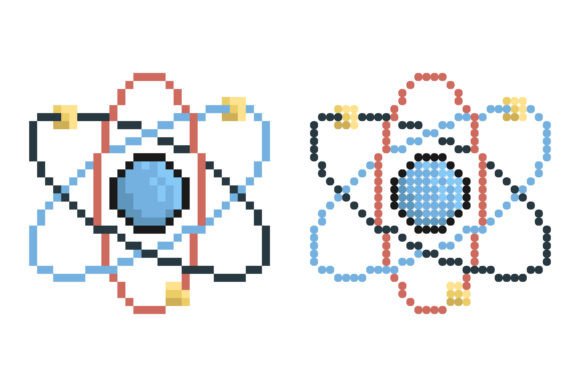
In the vast library of digital assets available to creators today, few images carry as much immediate recognition as the classic atomic symbol. The Pixel Icon. Atom, Electrons Revolve Around Proton is more than just a nostalgic nod to mid-century science textbooks; it is a functional, versatile graphic that bridges the gap between complex scientific concepts and accessible visual communication. This specific vector illustration, featuring electrons orbiting a central nucleus in clean, simple lines, offers a retro aesthetic that resonates with modern design trends while maintaining clarity for educational purposes.
For educators, marketers, and content creators, understanding how to leverage this icon can significantly enhance the effectiveness of their materials. Whether you are designing a slide deck for a high school physics class or creating branding for a tech startup, the atom icon serves as a universal shorthand for innovation, energy, and fundamental structure.
Bridging the Gap in Science Education
The primary and most obvious application of the Pixel Icon. Atom, Electrons Revolve Around Proton lies in the realm of education. Physics, often perceived as an intimidating subject by students, benefits greatly from visual simplification. When teachers introduce the concept of atomic structure, they are not just teaching facts; they are trying to build a mental model of the invisible world.
Using a clean, isolated vector on a white background allows educators to overlay labels, arrows, and annotations without visual clutter. For instance, a middle school science teacher might use this icon in a PowerPoint presentation to explain the Bohr model. Because the image is simple and retro, it feels approachable rather than overly technical. It strips away the quantum mechanical complexity that can confuse beginners, focusing instead on the foundational idea of orbits and nuclei.
Furthermore, this asset is invaluable for creating worksheets, flashcards, and study guides. Since it is a vector file, it scales perfectly from a small thumbnail in a digital quiz to a large poster on a classroom wall. This flexibility ensures that the visual quality remains crisp, reinforcing professionalism in educational materials. By using a consistent visual language, educators help students recognize patterns and retain information more effectively.
Symbolizing Innovation in Business and Branding
Beyond the classroom, the atom has become a powerful metaphor in the business world. It represents the building blocks of matter, suggesting that a company deals with fundamentals, core technologies, or essential services. Startups in the fields of nuclear power, renewable energy, biotechnology, and software development frequently adopt atomic imagery in their branding.
Consider a small business owner launching a new app focused on data optimization. Using the Pixel Icon. Atom, Electrons Revolve Around Proton in their logo or marketing materials subtly communicates that their product breaks down complex problems into manageable, efficient components. The retro style adds a layer of trustworthiness and timelessness, countering the often fleeting nature of tech trends.
Marketers can also use this icon to illustrate concepts of synergy and teamwork. Just as electrons revolve around a proton to create a stable atom, team members revolve around a central mission to create a successful organization. This metaphor works well in internal communications, annual reports, and corporate presentations. It provides a visual anchor for abstract ideas, making them tangible and easier for stakeholders to grasp.
Enhancing Digital Content and User Experience
In the digital landscape, icons play a crucial role in user experience (UX) design. They guide users, reduce cognitive load, and add visual interest to interfaces. The atom icon is particularly useful for websites and applications related to science, technology, engineering, and mathematics (STEM).
For bloggers and content creators, inserting a relevant vector image breaks up long stretches of text, making articles more readable and engaging. If you are writing a post about the history of nuclear power or the basics of chemistry, including the Pixel Icon. Atom, Electrons Revolve Around Proton provides immediate context. It signals to the reader that the content is scientifically grounded yet accessible.
Web designers appreciate the "isolated on white background" feature of this asset. It allows for easy integration into various color schemes and layouts. Whether placed against a dark mode interface or a bright, minimalist blog theme, the icon adapts seamlessly. This versatility saves time during the design process, allowing creators to focus on content strategy rather than image editing.
Practical Considerations for Users
Before downloading or purchasing any digital asset, it is important to consider how it fits into your specific project. While the Pixel Icon. Atom, Electrons Revolve Around Proton is highly versatile, its effectiveness depends on proper usage. Here are some key factors to keep in mind:
- Contextual Relevance: Ensure that the atomic symbol aligns with your message. Using it for a topic unrelated to science, structure, or energy might confuse your audience. For example, it would be inappropriate for a culinary blog unless you are discussing molecular gastronomy.
- Style Consistency: The retro, pixel-inspired or simple vector style should match the overall aesthetic of your brand or project. If your design language is ultra-modern and sleek, a retro icon might clash. However, if you aim for a friendly, approachable, or nostalgic feel, this icon is an excellent choice.
- Licensing and Usage Rights: Always check the license associated with the vector file. Some assets are free for personal use but require a commercial license for business applications. Understanding these terms protects you from legal issues and supports the creators who produce these valuable resources.
- Customization Potential: Vector files allow for extensive customization. You can change colors, adjust line weights, or modify the number of electron orbits to suit your needs. Take advantage of this flexibility to make the icon uniquely yours, ensuring it stands out in a crowded digital space.
The Enduring Appeal of Retro Science Aesthetics
There is a reason why retro science imagery continues to thrive in modern design. It evokes a sense of wonder and curiosity reminiscent of the space age and the early days of nuclear exploration. The Pixel Icon. Atom, Electrons Revolve Around Proton taps into this cultural nostalgia, creating an emotional connection with audiences who appreciate the history of scientific discovery.
For hobbyists and makers, this icon can be used in DIY projects, such as custom t-shirts, stickers, or home decor. It appeals to those who identify as "nerds" or "geeks" in a positive, proud way. By incorporating this symbol into personal projects, individuals express their passion for science and learning.
Moreover, the simplicity of the design makes it ideal for print-on-demand services. Entrepreneurs can easily integrate the atom icon into merchandise designs, knowing that it has broad appeal across different demographics. From children’s educational toys to adult apparel, the atom symbol transcends age barriers.
Making the Most of Your Visual Resources
Ultimately, the value of the Pixel Icon. Atom, Electrons Revolve Around Proton lies in its ability to communicate complex ideas simply and effectively. Whether you are an educator striving to make physics understandable, a marketer looking to convey innovation, or a designer seeking a clean, versatile graphic, this asset offers significant utility.
By understanding the contexts in which this icon thrives, you can make informed decisions about its application. Remember that good design is not just about aesthetics; it is about function and communication. When used thoughtfully, this simple retro vector can enhance your message, engage your audience, and elevate your professional output. As you continue to curate your digital toolkit, consider keeping such timeless symbols handy. They often provide the perfect visual solution when you need to illustrate the fundamental building blocks of your ideas.