Understanding the English Language Vector: A Practical Guide for Educators and Learners
In the evolving landscape of digital education, the term English Language Vector has emerged as a significant concept, particularly for those involved in curriculum design, instructional technology, and advanced language study. While it may sound technical, an English language vector is fundamentally a mathematical representation of linguistic data. It allows computers to understand the nuances of words, phrases, and sentences by mapping them into multi-dimensional space. For educators, students, and content creators, understanding this concept is no longer just for data scientists; it is becoming essential for anyone looking to leverage modern tools for school education, student courses, and effective lesson communication.
This article explores what an English language vector is, how it differs from traditional learning methods, and when it serves as the right resource for your educational goals. We will examine its applications in studying British English, enhancing character development in language learning, and utilizing visual resources like people flat cartoon illustrations in formats such as JPG and EPS.
Defining the Concept: Beyond Traditional Grammar
To grasp the value of an English language vector, one must first move beyond the idea of language as a static set of rules. Traditional school education often treats vocabulary and grammar as isolated units to be memorized. In contrast, vector-based approaches treat language as a dynamic network of relationships. Each word is assigned a coordinate in a vast geometric space. Words with similar meanings or usage patterns are located closer together in this space.
For a student course focused on deep comprehension, this distinction is critical. Instead of merely memorizing that "happy" and "joyful" are synonyms, a vector-based system understands the subtle contextual differences between them. This enables more sophisticated lesson communication, where feedback is tailored not just to correctness, but to appropriateness and tone. When learners engage with material powered by these vectors, they are exposed to the fluid nature of the english language character, recognizing how meaning shifts based on context, audience, and intent.
Comparing Approaches: Vectors vs. Rote Learning
When evaluating resources for studying British English or any other variant, it is helpful to compare vector-enhanced tools with traditional rote learning methods. Both have their place, but they serve different needs.
- Rote Learning: Best for initial vocabulary acquisition and mastering rigid grammatical structures. It is straightforward and requires minimal technological infrastructure. However, it often fails to teach pragmatic usage or nuanced expression.
- Vector-Based Learning: Excels in contextual understanding, semantic search, and personalized feedback. It helps learners see connections between concepts, making it ideal for intermediate to advanced students who need to refine their fluency. The tradeoff is that it often requires digital platforms and may feel less structured to those who prefer clear, linear progression.
For many adults aged 20–50 who are returning to education or upskilling, the vector approach offers a more efficient path to proficiency. It mirrors how humans naturally acquire language through exposure and pattern recognition, rather than explicit rule memorization. This makes it particularly effective for concept learn strategies, where understanding the underlying logic of the language is prioritized over disjointed facts.
The Role of Visuals in Vector-Enhanced Education
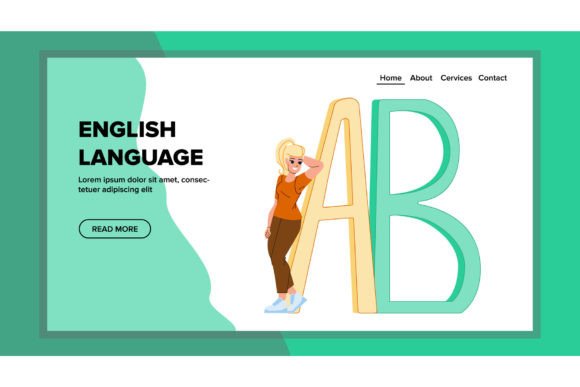
While the mathematics behind vectors is abstract, its application in educational materials is often highly visual. Modern student course materials frequently integrate graphics to reinforce linguistic concepts. Here, the mention of people flat cartoon illustration becomes relevant. These visuals are not merely decorative; they serve as cognitive anchors that help learners associate words with scenarios.
When designing or selecting resources, consider the format of these visual aids. JPG files are widely compatible and suitable for web-based lessons, ensuring that students can access materials on various devices without significant loading times. However, for educators who wish to customize materials or create high-quality print resources for classroom use, EPS formats are superior. EPS files are vector-based graphics themselves, meaning they can be scaled infinitely without losing quality. This parallels the scalability of language learning itself—starting with simple concepts and expanding into complex discourse without losing clarity.
Using flat cartoon illustrations of people in diverse scenarios helps humanize the english language character. It allows learners to visualize social interactions, body language, and cultural contexts, which are crucial for effective lesson communication. Whether you are studying British English idioms or business communication norms, seeing these interactions depicted visually reinforces the semantic relationships captured by language vectors.
Strengths and Limitations: Making an Informed Choice
Like any educational tool, the English language vector approach has specific strengths and limitations. Understanding these will help you decide if it aligns with your learning or teaching objectives.
Strengths
- Contextual Accuracy: Vector models excel at understanding polysemy (words with multiple meanings). They can distinguish between "bank" as a financial institution and "bank" as a river edge based on surrounding words.
- Personalization: Digital platforms using these models can adapt to individual learner profiles, offering targeted exercises that address specific gaps in knowledge.
- Efficacy in Communication: By focusing on semantic proximity, learners develop a more natural flow in speaking and writing, improving overall lesson communication skills.
Limitations
- Dependency on Technology: Fully leveraging vector-based learning requires access to digital devices and reliable internet, which may not be available in all school education settings.
- Lack of Explicit Rule Explanation: Some learners, particularly those with analytical minds, may find the implicit nature of vector-based feedback frustrating. They may prefer explicit grammatical explanations that traditional textbooks provide.
- Cultural Nuance Gaps: While improving, AI models may still struggle with deeply cultural or regional nuances, such as specific British English colloquialisms, unless specifically trained on diverse datasets.
When Is This Approach the Right Fit?
Deciding whether to incorporate an English language vector focused resource into your study routine depends on your current level and goals. If you are a beginner struggling with basic sentence structure, traditional methods might offer the clarity you need. However, if you are an intermediate learner aiming to refine your style, expand your vocabulary in context, or prepare for professional environments, vector-enhanced tools can provide the edge you need.
For educators, integrating these concepts into a student course can transform passive learning into active exploration. By using tools that highlight semantic relationships, teachers can encourage students to think critically about word choice and tone. This is especially valuable when studying British English, where subtlety and understatement often carry significant meaning. A vector-aware approach helps learners decode these subtleties by showing how words cluster in formal versus informal contexts.
Moreover, the integration of visual elements like people flat cartoon illustration in JPG or EPS formats supports multimodal learning. Students who benefit from visual cues will find that these illustrations, when paired with vector-driven text analysis, create a richer, more memorable learning experience. This combination addresses different learning styles, making the concept learn process more inclusive and effective.
Final Considerations for Educators and Learners
As you evaluate options for school education or personal development, remember that no single method is universally superior. The best approach often involves a blend of traditional rigor and modern technological insight. An english language vector is not a replacement for human interaction or foundational study; it is a powerful lens that brings the hidden structures of language into focus.
When selecting resources, look for those that balance technical sophistication with user-friendly design. Check if the platform offers transparent explanations for its recommendations. Ensure that visual aids, such as cartoon illustrations, are high-quality and culturally appropriate. Whether you are downloading assets in EPS for custom lesson plans or using web-based tools with JPG graphics, prioritize materials that support your specific learning objectives.
Ultimately, the goal of studying the english language character is to communicate effectively and authentically. By understanding the tools available, including those powered by language vectors, you can make more informed decisions about your educational journey. Whether you are a teacher designing a curriculum or a student seeking to master nuanced communication, embracing these modern approaches can lead to deeper understanding and greater confidence in your language skills.