Unlocking Creativity: The Real Value of Kids Drawing Painting in School Education
We have all seen it. A child, completely absorbed, crayon in hand, creating a vibrant mess on a piece of paper—or worse, the living room wall. For many adults, this instinctive urge to correct or clean up is strong. However, when we step back and look at Kids Drawing Painting. School Education through a practical lens, we see something far more valuable than mere scribbles. We see the foundational architecture of creative thinking being built in real time.
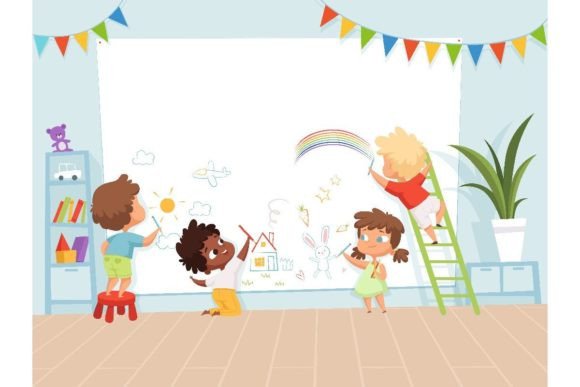
This concept isn’t just about art class. It is about integrating visual expression into the broader educational journey. Whether you are a parent homeschooling your children, an educator designing a curriculum, or a content creator looking for authentic visuals like a childhood vector picture or an illustration of a child paint crayon on wall, understanding the mechanics of this process changes how you approach creativity.
Beyond the Classroom: Why Visual Expression Matters
In traditional school settings, drawing and painting are often siloed into specific "art hours." But the reality of cognitive development suggests that visual literacy should be woven into every subject. When children draw, they are not just making pictures; they are processing information. They are translating abstract concepts into concrete forms.
For educators and parents, recognizing this shift is crucial. It means that a sketch of a plant during a biology lesson is as valuable as a written report. It means that allowing a child to illustrate their feelings after a difficult day provides emotional data that words might miss. This is where the true power of Kids Drawing Painting. School Education lies—it bridges the gap between internal thought and external communication.
Real-World Applications for Different Users
The utility of these resources and methodologies extends well beyond the school gate. Different groups leverage these concepts in unique, practical ways.
For Educators and Curriculum Designers
Teachers are constantly seeking ways to engage diverse learners. Incorporating drawing into history, science, or language arts can break down barriers for students who struggle with text-heavy instruction. For instance, asking students to draw a scene from a novel forces them to visualize details they might otherwise skim over. It turns passive reading into active reconstruction.
Moreover, using assets like a school education process for childrens background of creativity childhood vector picture in presentations or classroom materials can make complex pedagogical concepts more accessible to parents and administrators. Visual aids help stakeholders understand the "why" behind creative curricula.
For Content Creators and Marketers
If you are a blogger, marketer, or small business owner targeting families, authenticity is your currency. Stock photos of perfectly posed children smiling at cameras feel sterile. In contrast, illustrations that capture the chaotic energy of creation—like a child paint crayon on wall illustration—resonate because they reflect reality.
Using high-quality vector graphics, such as those found in an EPS format ZIP folder, allows you to scale these images for anything from social media posts to large-format banners without losing quality. These visuals tell a story of uninhibited creativity, which aligns perfectly with brands promoting educational toys, art supplies, or progressive schooling methods.
For Parents and Homeschoolers
At home, the pressure to "teach" can sometimes stifle natural curiosity. Understanding the principles of Kids Drawing Painting. School Education helps parents create environments where mistakes are part of the process. Instead of fearing the mess, you can prepare for it. Provide washable paints, designate specific walls or large paper rolls for free expression, and focus on the effort rather than the outcome.
This approach reduces anxiety for both parent and child. It transforms art time from a performance into a playground for the mind. You are not raising a professional painter; you are raising a problem-solver who is comfortable experimenting with ideas.
What to Consider Before Choosing Resources
Whether you are downloading digital assets or selecting physical supplies, a few practical considerations can save you time and frustration.
- Format Flexibility: If you are a designer or publisher, ensure your digital downloads include editable formats like EPS. This allows you to change colors to match your brand palette or isolate specific elements, such as removing the background from a childhood vector picture to place it in a new context.
- Age Appropriateness: Not all drawing activities suit all ages. Toddlers need gross motor skill development through large movements, while older children benefit from fine motor challenges. Ensure the resources or lessons you choose align with the developmental stage of the child.
- Cultural Relevance: Look for illustrations and examples that reflect diverse backgrounds. Children engage more deeply when they see themselves represented in the materials. A generic stick figure is less impactful than a detailed vector showing varied ethnicities and abilities engaging in creative play.
- Ease of Use: For busy educators and parents, complexity is the enemy of consistency. Choose tools and digital assets that are intuitive. If a lesson plan requires hours of prep, it likely won’t happen. If a vector file is poorly layered, it won’t be useful for quick design tweaks.
The Long-Term Impact of Early Creative Freedom
It is easy to dismiss childhood drawing as a phase. However, the habits formed during these early years persist. Children who are encouraged to express themselves visually grow into adults who are more comfortable with ambiguity and innovation. They learn that there is rarely one "right" answer, a mindset that is invaluable in today’s rapidly changing job market.
When we support Kids Drawing Painting. School Education, we are not just teaching art. We are teaching resilience. We are teaching observation. We are teaching the courage to put something imperfect into the world and refine it over time.
Integrating Digital and Physical Worlds
In our digital age, the line between physical crayons and digital tablets is blurring. Many schools now use apps that simulate painting, offering endless colors without the cleanup. While this has its place, it should not replace the tactile experience of real paint and paper. The sensory feedback of dragging a crayon across textured paper builds neural connections that screens cannot replicate.
However, digital resources play a vital supporting role. High-quality vectors and illustrations can inspire physical projects. A teacher might project a school education process for childrens background of creativity childhood vector picture onto a whiteboard to discuss composition before letting students try it themselves. This hybrid approach leverages the best of both worlds.
Making It Work in Your Context
To truly benefit from these insights, start small. If you are a business owner, audit your current visual content. Does it feel authentic? Could a well-chosen illustration of a child creating art better convey your message than a generic stock photo? If you are an educator, look for one subject this week where drawing could enhance understanding. Maybe it’s sketching a math problem or diagramming a story plot.
If you are a parent, observe your child’s next drawing session without intervening. Notice what they choose to emphasize. Ask open-ended questions like, "Tell me about this part," rather than "What is it?" This simple shift validates their process and encourages deeper reflection.
The resources available today, from physical supplies to digital EPS files, are tools. Their value depends entirely on how we use them. By embracing the messy, unpredictable, and profoundly human nature of Kids Drawing Painting. School Education, we unlock potential not just in children, but in ourselves as guides, creators, and learners.
Ultimately, whether you are downloading a ZIP folder of vectors or buying a box of crayons, you are investing in a language that predates words. It is a language of connection, exploration, and truth. And in a world that often feels fragmented, that is a resource worth cultivating.