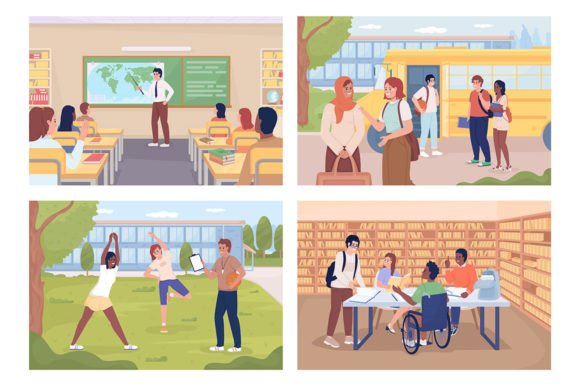
Integrating Kindergarten Classroom Flat Illustration Into Your Creative and Educational Workflows
In the rapidly evolving landscape of digital content creation, visual assets serve as the backbone of effective communication. Whether you are an educator designing curriculum materials, a marketer crafting campaigns for family-oriented products, or a developer building educational apps, the quality and relevance of your imagery matter immensely. A Kindergarten Classroom Flat Illustration is more than just a decorative element; it is a versatile tool that can streamline your design process and enhance user engagement. This type of asset, characterized by its clean lines, vibrant yet balanced color palettes, and simplified forms, offers a unique blend of professionalism and approachability.
Understanding how to effectively incorporate a Kindergarten classroom flat color vector illustration into your projects requires a shift in perspective. Instead of viewing it merely as a static image, consider it a modular component within a broader creative ecosystem. From initial concept planning to final deployment across various platforms, these illustrations support consistency, scalability, and clarity. By examining the practical applications of primary grade playroom visuals, we can uncover strategies that improve efficiency and elevate the overall quality of your output.
The Strategic Value of Vector-Based Educational Assets
When selecting visual resources for projects involving preschool education or elementary school environments, the format of the file is just as critical as the aesthetic style. A high-quality Kindergarten Classroom Flat Illustration typically comes in a ZIP file containing multiple formats such as EPS, JPG, PNG, SVG, and AI. This variety is not accidental; it addresses the diverse technical requirements of modern workflows. For instance, vector formats like AI and EPS allow for infinite scalability without loss of quality, which is essential when adapting assets for large-format prints like classroom banners or small-scale icons in mobile applications.
The inclusion of SVG files further enhances usability for web developers and UI designers. Unlike raster images, SVGs are code-based, meaning they load faster and remain crisp on high-resolution displays. This technical flexibility ensures that your elementary school class 2D cartoon interior with window on background looks professional whether it is viewed on a smartphone screen or a 4K monitor. By preparing your assets in these multiple formats upfront, you eliminate the need for time-consuming conversions later in the project lifecycle, thereby reducing bottlenecks and maintaining momentum.
Enhancing Educational Materials and Curriculum Design
For educators and instructional designers, creating engaging learning materials is a constant challenge. A well-designed Kindergarten Classroom Flat Illustration can serve as the foundational visual theme for worksheets, presentation slides, and interactive digital lessons. The simplicity of flat design reduces cognitive load for young learners, allowing them to focus on the educational content rather than being distracted by overly complex or realistic details. When depicting a room with furniture for kids, the clear delineation of objects such as desks, chairs, bookshelves, and toys helps children identify and categorize their environment.
Implementing these illustrations into your teaching resources involves a few key steps. First, establish a consistent color scheme that aligns with your brand or school identity. Many flat illustrations use bright, primary colors that evoke energy and curiosity, but you can adjust these hues in the AI or EPS files to match specific thematic units. Second, use the modular nature of the assets to create custom scenes. You might isolate specific elements, such as a reading corner or a science station, to highlight particular activities. This level of customization ensures that your materials feel tailored and relevant, fostering a stronger connection with students.
Streamlining Marketing and Branding Efforts
Marketers and small business owners targeting the education sector can leverage a Kindergarten Classroom Flat Illustration to build trust and appeal to their audience. Parents and educators are drawn to visuals that convey safety, organization, and joy. A clean, cheerful depiction of a primary grade playroom communicates these values instantly. Whether you are designing brochures for a daycare center, creating social media graphics for an educational toy company, or developing a website for a tutoring service, these illustrations provide a cohesive visual language.
To maximize impact, integrate the illustration into your broader branding strategy. Use the same character styles and color palettes across all touchpoints to reinforce brand recognition. For example, if your logo features soft rounded edges, choose a flat illustration style that mirrors this geometry. Additionally, consider the context in which the image will be viewed. On social media, where attention spans are short, a bold and simple preschool education scene can stop the scroll and encourage engagement. In email newsletters, these visuals can break up text and guide the reader’s eye toward call-to-action buttons.
Optimizing Workflow Efficiency and Asset Management
Efficient asset management is crucial for maintaining productivity, especially when working on multiple projects simultaneously. When you purchase a comprehensive package that includes a Kindergarten Classroom Flat Illustration along with various file formats, you are investing in long-term convenience. Organize your digital library by categorizing assets based on theme, format, and usage rights. Create folders for vector sources, web-ready exports, and print-ready files. This systematic approach minimizes the time spent searching for the right file and reduces the risk of using low-resolution versions in high-stakes deliverables.
Furthermore, familiarize yourself with the editing capabilities of the provided formats. While JPGs and PNGs are ready to use, AI and EPS files offer the opportunity for modification. Learn basic techniques in Adobe Illustrator or similar software to adjust colors, rearrange elements, or add text. This empowerment allows you to adapt the elementary school class 2D cartoon interior with window on background to fit specific spatial constraints or design requirements without needing to commission new artwork. Over time, this skill set becomes invaluable, enabling you to respond quickly to client feedback or changing project scopes.
- Scalability: Use vector formats for projects requiring different sizes, from app icons to billboards.
- Consistency: Maintain a uniform visual style across all educational or marketing materials.
- Accessibility: Ensure high contrast and clear shapes to support diverse learning needs.
- Speed: Leverage pre-made assets to reduce design time and accelerate project delivery.
Technical Considerations for Digital Implementation
When deploying a Kindergarten Classroom Flat Illustration in digital environments, performance optimization is key. Large image files can slow down website loading times, negatively affecting user experience and SEO rankings. To mitigate this, use compressed PNGs for web use and SVGs whenever possible. Test your images on various devices to ensure they render correctly and maintain their visual integrity. Pay attention to the background transparency; a PNG with a transparent background allows the illustration to blend seamlessly with different website themes or slide backgrounds.
Additionally, consider accessibility standards. Ensure that any text embedded within the illustration is legible and that color choices provide sufficient contrast for users with visual impairments. If the illustration conveys important information, include alternative text descriptions for screen readers. This attention to detail not only broadens your audience reach but also demonstrates a commitment to inclusive design principles. By treating the room with furniture for kids as an integral part of the user interface, you enhance both functionality and aesthetics.
Long-Term Utility and Adaptability
The true value of a high-quality Kindergarten Classroom Flat Illustration lies in its longevity. Unlike trend-heavy designs that may quickly become outdated, flat design has proven to be enduring due to its clarity and versatility. As your projects evolve, you can continue to reuse and repurpose these assets. An illustration created for a preschool brochure today might serve as the background for an elementary school webinar next year. By establishing a library of reliable, high-quality visuals, you build a foundation for sustainable creative production.
Moreover, staying updated with software updates and design trends can help you extract even more value from these assets. New features in design tools may offer easier ways to manipulate vector paths or apply effects that refresh the look of older illustrations. Regularly reviewing your asset library and experimenting with new combinations can keep your content fresh and engaging. Ultimately, the goal is to create a seamless workflow where the Kindergarten Classroom Flat Illustration supports your objectives without becoming a bottleneck. By focusing on preparation, compatibility, and strategic integration, you transform a simple graphic into a powerful asset for your professional toolkit.