Visualizing the Crisis: Understanding Bullying of Lonely Children Through Flat Vector Illustrations
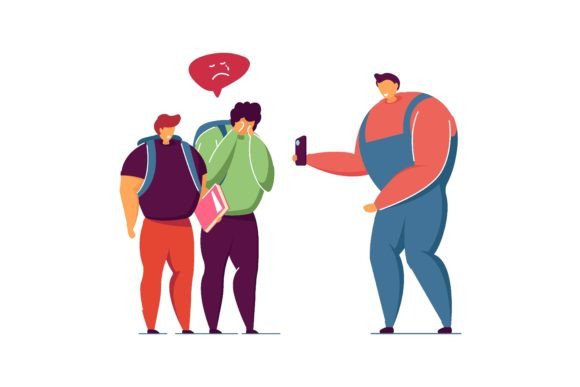
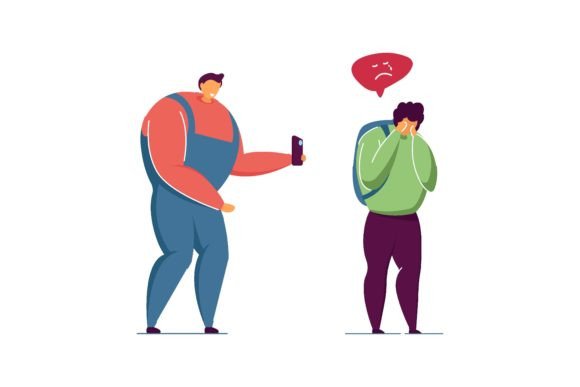
In the realm of educational psychology and social advocacy, visual communication serves as a powerful tool for raising awareness about complex emotional issues. One such critical issue is the systemic isolation and harassment faced by vulnerable students. When we examine the concept of a bullying lonely child in school, we are not merely looking at an interpersonal conflict; we are observing a breakdown in the social fabric of educational environments. The use of flat vector illustrations to depict these scenarios has become increasingly prevalent in digital media, educational banners, and awareness campaigns. These graphics, often featuring angry kids laughing at a sad nerd boy in a school hall, encapsulate the stress, conflict, and educational challenges inherent in bullying dynamics.
The Power of Visual Metaphors in Social Awareness
Flat vector art is characterized by its clean lines, bold colors, and lack of three-dimensional depth. This stylistic choice is not arbitrary when dealing with sensitive topics like bullying. By stripping away realistic textures and shadows, flat design forces the viewer to focus on the core elements of the composition: body language, facial expressions, and spatial relationships. In a typical illustration depicting a bullying lonely child in school, the visual hierarchy is stark. The aggressors are often grouped together, creating a sense of overwhelming force, while the victim is isolated, emphasizing their loneliness and vulnerability.
This visual shorthand allows educators, parents, and policymakers to grasp the emotional weight of the situation instantly. The "sad nerd boy" archetype, while a stereotype, serves as a recognizable symbol for any child who feels different or excluded. Whether due to academic interests, physical appearance, or social anxiety, the figure represents the universal experience of alienation. When these images are used in banner designs for school safety programs, they act as immediate triggers for empathy and recognition, prompting viewers to reflect on their own experiences or observations within school halls.
Deconstructing the Dynamics of School Hallway Conflict
The school hallway is a unique social ecosystem. Unlike the classroom, which is structured and supervised, the hallway is a transitional space where social hierarchies are often enforced with minimal adult intervention. It is here that the stress and conflict of bullying frequently manifest. An illustration capturing this moment typically shows a contrast in energy: the high-energy, aggressive posture of the bullies versus the withdrawn, defensive stance of the victim.
Understanding this dynamic requires looking beyond the surface-level aggression. The laughter of the angry kids is not just an expression of amusement; it is a tool of social dominance. It signals to bystanders who holds power and who does not. For the lonely child, this public humiliation reinforces their isolation. The flat vector style effectively captures this dichotomy through color theory. Aggressors might be depicted in warm, aggressive tones like reds and oranges, while the victim is often shown in cool, receding colors like blues or grays. This subtle coding helps convey the emotional temperature of the scene without the need for text.
The Role of Bystanders and Social Contagion
A crucial aspect of these illustrations is the implicit presence of the bystander. Even if not explicitly drawn, the audience for the bullying is implied. The "angry kids laughing" are performing for an audience, seeking validation from their peers. This performance aspect of bullying is critical to understand because it suggests that intervention can come from shifting the social reward structure. If the laughter stops, the power of the bully diminishes.
Educators using these visuals in training modules can point out how the group mentality fuels the behavior. The flat design’s simplicity allows for easy modification, enabling creators to add bystanders who are stepping in, thereby modeling positive intervention strategies. This transforms the image from a depiction of victimization into a tool for teaching resilience and allyship.
Applications in Educational and Corporate Design
The demand for high-quality, concept-driven imagery has led to the widespread use of these flat vector illustrations in various professional contexts. For web designers and content creators, finding the right image to represent school education concepts related to mental health is challenging. Stock photography can sometimes feel too staged or invasive, whereas vector art offers a level of abstraction that respects the dignity of the subject while still conveying the severity of the issue.
- Website Banners: Non-profits and school districts use these graphics on landing pages for anti-bullying resources. The clear, scalable nature of vector files ensures they look crisp on all devices, from mobile phones to large desktop monitors.
- Presentation Decks: Psychologists and counselors use these images in slideshows to discuss peer pressure and social exclusion with parents and staff. The non-threatening aesthetic makes difficult conversations more approachable.
- Social Media Campaigns: Short, impactful visuals are essential for scrolling feeds. A well-designed flat vector of a lonely child can stop a user mid-scroll, encouraging them to read accompanying articles or share the message.
For business owners in the ed-tech sector, incorporating these themes into user interfaces or marketing materials demonstrates a commitment to social responsibility. It signals that the company understands the holistic environment of learning, which includes emotional safety as well as academic instruction.
Psychological Impact and the Need for Empathy
While the illustration is a static image, it represents a dynamic and ongoing psychological trauma. The lonely child depicted is not just having a bad day; they are experiencing chronic stress that can have long-term effects on mental health. Research indicates that victims of bullying are at higher risk for depression, anxiety, and academic decline. The visual representation of this pain serves as a reminder that bullying is not a rite of passage but a serious public health concern.
By humanizing the statistic through art, we bridge the gap between data and emotion. When a viewer sees the "sad nerd boy," they may recall their own childhood feelings of inadequacy or fear. This personal connection is vital for driving behavioral change. It moves the conversation from abstract policy discussions to concrete human experiences. Educators who utilize these visuals are better equipped to foster classrooms where empathy is valued over dominance.
Design Considerations for Ethical Representation
When creating or selecting images for bullying lonely child in school themes, ethical considerations are paramount. Designers must avoid glorifying the aggressors or making the victim appear weak in a way that invites further ridicule. The focus should remain on the injustice of the act and the need for support. Flat vector illustrations allow for this balance by controlling the narrative through composition. The victim can be centered, drawing the eye and inviting compassion, while the bullies are peripheral, reducing their visual power.
Furthermore, diversity in representation is essential. Bullying affects children of all backgrounds, abilities, and identities. Modern vector sets should reflect this reality, moving beyond the单一 "nerd" stereotype to include various forms of social exclusion. This inclusivity ensures that more viewers can see themselves or their students in the imagery, making the educational message more relevant and effective.
Moving From Awareness to Action
The ultimate goal of using such poignant imagery is not just to raise awareness but to inspire action. Schools and communities must use these visual cues as starting points for deeper engagement. This involves implementing comprehensive anti-bullying policies, training staff to recognize signs of social isolation, and creating safe spaces for students to express their feelings. The conflict depicted in the school hall is a symptom of larger systemic issues that require proactive solutions.
For creators and educators, the availability of high-quality flat vector assets provides a valuable resource for building these narratives. By integrating these images into newsletters, workshops, and digital platforms, stakeholders can maintain a consistent visual language around safety and respect. This consistency helps reinforce the message that bullying is unacceptable and that every child deserves to feel safe and included in their educational environment.
In conclusion, the intersection of graphic design and social advocacy offers a unique pathway for addressing the pervasive issue of school bullying. Through the careful use of flat vector illustrations, we can visualize the invisible pain of lonely children and challenge the culture of aggression that sustains it. These images serve as more than just decorative elements; they are catalysts for conversation, empathy, and ultimately, change. As we continue to develop educational resources, let us ensure that our visual storytelling aligns with our moral imperative to protect and nurture every student.