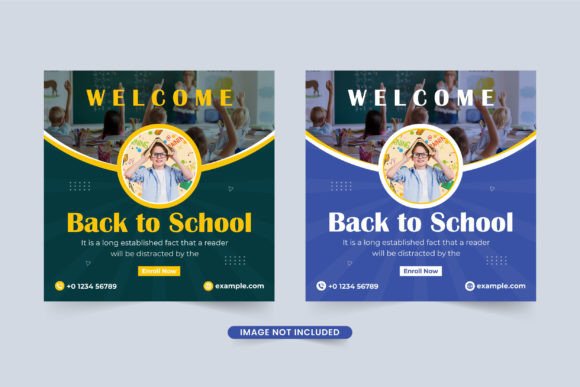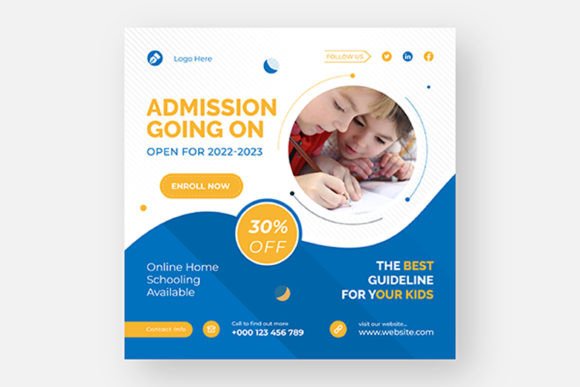
Strategic Visual Communication: Evaluating the Education Social Media Instagram Post Template for School Marketing
In the contemporary educational landscape, digital presence is no longer optional; it is a fundamental component of institutional credibility. Schools, tutoring centers, and educational consultancies compete not just on academic outcomes but on perceived community engagement and modernity. Within this competitive sphere, the Education Social Media Instagram Post template emerges as a specialized resource designed to streamline visual communication. Unlike generic graphic design assets, this tool is engineered specifically for the nuances of the education sector, balancing professionalism with the visual appeal required to capture attention on fast-moving social platforms.
For administrators, marketing coordinators, and independent educators, understanding the utility of such templates requires looking beyond surface-level aesthetics. It involves evaluating how pre-designed structures can impact workflow efficiency, brand consistency, and audience retention. This analysis explores the distinct features of these templates, compares them against alternative design approaches, and helps decision-makers determine if this resource aligns with their specific operational needs.
Defining the Asset: Structure and Technical Specifications
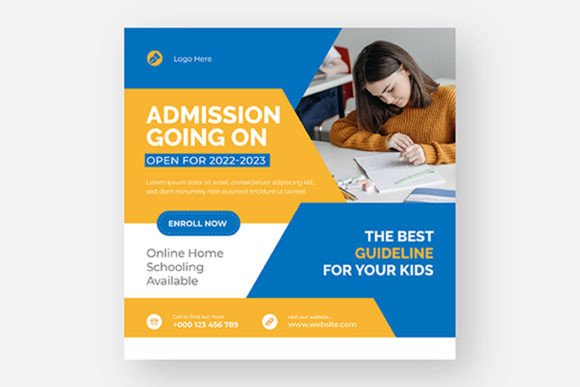
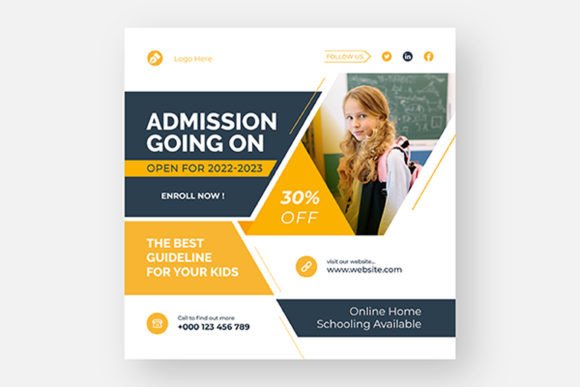
An Education Social Media Instagram Post template is more than a static image; it is a flexible framework built for customization. The core value proposition lies in its adaptability. Designed with an RGB color profile and a resolution of 72 DPI, these files are optimized specifically for digital screens rather than print media. This distinction is crucial because digital displays render colors differently than printers, and using the correct profile ensures that the vibrant hues intended to attract students and parents appear accurately on smartphones and tablets.
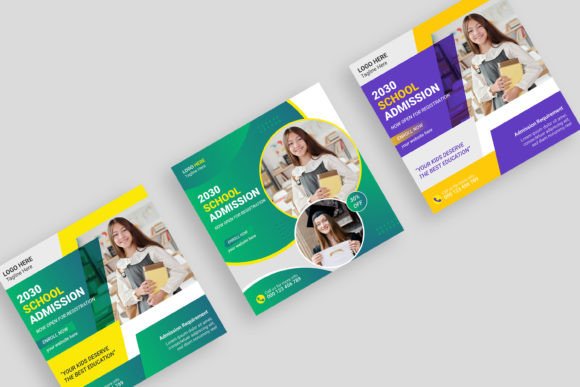
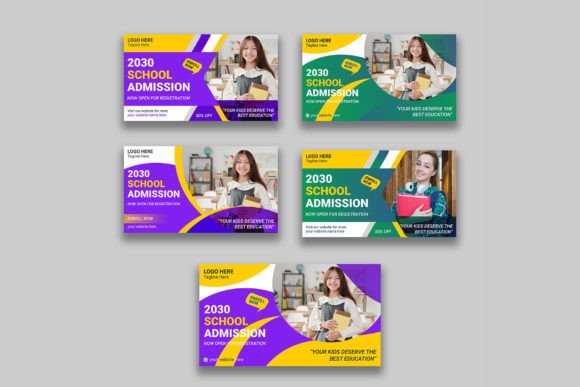
The technical deliverables typically include one AI (Adobe Illustrator) file, one EPS (Encapsulated PostScript) file, an information file, and a read-me guide. The inclusion of vector-based formats like AI and EPS is significant. Unlike raster images (such as JPEGs or PNGs), vector files allow for infinite scalability without loss of quality. This means that text elements, icons, and shapes can be resized, recolored, or rearranged without becoming pixelated. For school businesses that may need to repurpose a single design for different platforms—such as adjusting an Instagram square post into a Facebook banner or a website header—this flexibility is invaluable.
Furthermore, the "easy customizable and editable" nature of these templates reduces the barrier to entry for non-designers. While professional graphic designers will appreciate the layered structure, school staff with basic software knowledge can often swap out placeholder text, insert school logos, and adjust color schemes to match institutional branding guidelines. This democratization of design allows educational institutions to maintain a high volume of content output without necessarily retaining a full-time creative team.
Comparative Analysis: Templates vs. Custom Design and Generic Tools
When evaluating content creation strategies, educational leaders generally face three primary paths: hiring custom design services, using drag-and-drop online tools, or utilizing professional templates like the Education Social Media Instagram Post. Each approach carries distinct tradeoffs regarding cost, time, and brand uniqueness.
Custom Design Services offer the highest level of uniqueness and strategic alignment. A dedicated designer can create visuals that perfectly encapsulate a school’s specific ethos. However, this comes at a premium cost and often involves longer turnaround times. For daily or weekly social media updates, the budget and logistical overhead can be prohibitive. In contrast, the template approach offers a middle ground. It provides a professionally structured foundation that ensures visual coherence while allowing for rapid iteration. It is not as unique as a bespoke campaign, but it is significantly more efficient and cost-effective.
Generic Online Design Platforms have gained popularity due to their ease of use. These web-based tools offer thousands of pre-made layouts. However, they often suffer from two main limitations: homogenization and limited control. Because these platforms are accessible to millions of users, many schools end up using identical layouts, diluting brand distinctiveness. Additionally, online tools often restrict advanced editing capabilities. Users may find themselves unable to fine-tune kerning, adjust specific vector nodes, or export files in the exact formats needed for high-quality archiving. The Education Social Media Instagram Post template, provided in AI and EPS formats, retains the professional depth of desktop publishing software, offering greater control over the final output than most browser-based alternatives.
Strategic Fit: When This Resource Adds Value
Determining whether this type of template is the right choice depends largely on the institution’s current resources and content strategy. The Education Social Media Instagram Post is particularly well-suited for scenarios where consistency and speed are prioritized over radical creative experimentation.
- Brand Consistency: Schools often struggle with fragmented visual identities across different departments. A standardized template ensures that posts from the admissions office, the sports department, and the academic faculty all share a cohesive look and feel. This reinforces brand recognition among parents and prospective students.
- Resource Constraints: For small private schools, tutoring startups, or individual educators, budget limitations may preclude hiring a full-time designer. These templates provide a professional aesthetic at a fraction of the cost, allowing smaller entities to compete visually with larger institutions.
- High-Volume Content Needs: During enrollment seasons or exam periods, the demand for social media content spikes. Having a library of editable templates allows marketing teams to produce high-quality graphics rapidly, ensuring that timely information reaches the audience without delays caused by design bottlenecks.
However, there are limitations to consider. If an institution’s primary goal is to launch a highly innovative, award-winning advertising campaign, a pre-made template may feel too restrictive. Templates are designed for utility and clarity, not necessarily for avant-garde artistic expression. In such cases, a hybrid approach—using templates for routine updates and commissioning custom work for major campaigns—may be the most effective strategy.
Evaluating Usability and Technical Requirements
Before integrating these assets into a workflow, it is essential to assess the technical readiness of the team. While the files are described as "easy customizable," they do require compatible software. Adobe Illustrator is the industry standard for opening AI files, though other vector-based programs may support EPS imports with varying degrees of fidelity. Institutions must ensure that staff members have access to these tools and possess a baseline understanding of layer management and vector editing.
The inclusion of a "Read Me" file and an "Information File" is a critical support feature. These documents typically provide guidance on font usage, color codes, and best practices for editing. Ignoring these resources can lead to common pitfalls, such as substituting fonts that disrupt the layout balance or altering aspect ratios that compromise the design’s integrity. A successful implementation requires a brief training session or a review of these guidelines to maximize the template’s potential.
Making an Informed Decision
Choosing the right visual resources for educational marketing is a strategic decision that impacts both operational efficiency and public perception. The Education Social Media Instagram Post template represents a pragmatic solution for institutions seeking to elevate their digital presence without incurring the high costs of custom design or sacrificing the control offered by professional software.
It is important to view this tool not as a replacement for strategic thinking, but as an enabler of consistent execution. The visual appeal of the template draws the eye, but the relevance of the content drives engagement. Schools should pair these high-quality designs with thoughtful messaging that addresses the specific concerns and aspirations of their community.
Ultimately, the decision rests on balancing quality, speed, and budget. For many educational businesses, especially those looking to establish a polished, professional online identity efficiently, this template offers a compelling advantage. By leveraging its customizable features and professional structure, schools can focus less on the mechanics of design and more on the substance of their educational mission, ensuring that their digital footprint accurately reflects the quality of their instruction.