Characters Learning Spanish Language: Visualizing the Journey to Fluency
The landscape of language acquisition has shifted dramatically in the last decade. Gone are the days when learning a new tongue meant solely memorizing conjugation tables from a dusty textbook in a silent classroom. Today, the process is dynamic, visual, and deeply integrated into our digital lives. This evolution is perfectly captured in the concept of Characters Learning Spanish Language. It represents more than just a pedagogical method; it is a visual metaphor for the modern learner’s experience—approachable, engaging, and scalable.
For educators, content creators, and marketing professionals, understanding this visual narrative is crucial. The imagery of tiny people interacting with huge textbooks, flags, and digital interfaces speaks to the overwhelming yet exciting nature of mastering a new skill. It bridges the gap between abstract linguistic concepts and tangible human effort. By leveraging these visual metaphors, we can better communicate the value of language education in a crowded digital marketplace.
The Visual Metaphor of Modern Education
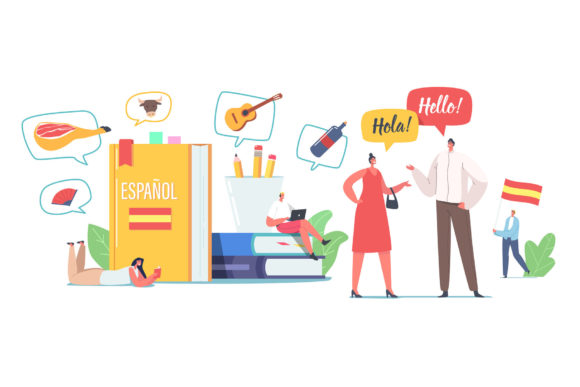
Consider the striking image of Tiny People at Huge Textbooks and Flag. This illustration style does more than catch the eye; it contextualizes the learner’s journey. The "huge textbook" symbolizes the vastness of the Spanish language—its rich history, complex grammar, and extensive vocabulary. The "tiny people" represent the individual learner, initially small in knowledge but ambitious in spirit. This contrast creates an immediate emotional connection. It acknowledges the challenge while celebrating the courage required to begin.
Incorporating such visuals into educational materials or marketing campaigns helps demystify the learning process. When potential students see characters navigating these oversized elements, they recognize their own struggles and aspirations. It transforms the intimidating task of learning Spanish into an adventurous quest. This approach aligns with current trends in user experience design, where empathy and relatability drive engagement. Whether you are designing a course landing page or creating social media content, these visual cues signal that your program understands the student’s perspective.
From Classroom to Cloud: The Rise of Interactive Learning
The transition from traditional instruction to Webinar and Online Education has redefined how Spanish is taught and learned. The image of a Teacher and Students Chatting in a digital space highlights the importance of interaction. Language is inherently social, and even in virtual environments, human connection remains the cornerstone of effective learning. Modern platforms facilitate this through live webinars, breakout rooms, and interactive chat features, ensuring that the "chatting" aspect is not lost in translation.
This shift reflects broader changes in professional workflows and lifestyle preferences. Adults aged 20 to 50, including busy professionals and entrepreneurs, require flexibility. They need courses that fit into their schedules without compromising on quality. The visual of a webinar session suggests accessibility and convenience. It implies that one can learn Spanish from anywhere, at any time, while still receiving personalized attention. For businesses, offering such flexible learning solutions can be a significant competitive advantage, appealing to a global workforce that values continuous development.
The Power of Simple Beginnings: Saying Hola
Every journey begins with a single step, or in this case, a single word. The phrase Say Hola encapsulates the simplicity and warmth of starting to speak Spanish. It is an invitation, a greeting, and a promise of connection. In marketing terms, this is the hook. It lowers the barrier to entry by focusing on immediate, achievable goals rather than distant fluency.
For creators and bloggers, emphasizing these small wins can build momentum. Content that celebrates the first hello, the first ordered coffee, or the first successful conversation resonates deeply with audiences. It makes the learning process feel manageable and rewarding. This strategy is particularly effective for hobbyists and curious readers who may be intimidated by the prospect of full immersion. By breaking down the language into bite-sized, friendly interactions, you encourage consistent engagement and long-term retention.
Design Flexibility for Creative Professionals
For designers and marketers, the utility of these visual assets extends beyond their aesthetic appeal. The availability of high-quality Cartoon Vector Illustration files allows for extensive customization. To make changes to the vector files, use the vector editor Adobe Illustrator, Corel Draw, etc. This flexibility ensures that the visuals can be tailored to match specific brand identities, color schemes, and messaging strategies.
Additionally, you can use raster editors Adobe Photoshop, Gimp, etc. to work with PNG files. This dual compatibility is essential for modern digital workflows. Whether you are creating high-resolution print materials or optimizing images for fast-loading web pages, having access to multiple file formats streamlines the production process. The inclusion of various formats ensures that the visuals remain crisp and clear across all devices and platforms, from mobile screens to large presentation displays.
What’s Included in the Asset Package
Understanding the technical specifications of your design resources is key to maximizing their potential. A comprehensive package typically includes:
- .EPS vector file EPS10: Ideal for professional printing and scalable graphics without loss of quality.
- .AI vector file CS5: Compatible with older versions of Adobe Illustrator, ensuring broad accessibility for design teams.
- .PNG files with transparent background: Perfect for web use, allowing seamless integration into various layouts and backgrounds.
- .JPG file 300 dpi: High-resolution images suitable for both digital and print applications where transparency is not required.
- .SVG: Scalable Vector Graphics for responsive web design, ensuring clarity on all screen sizes.
These formats cater to a wide range of professional needs, from quick social media posts to detailed brochure designs. By providing such versatility, the assets support a cohesive visual strategy across all touchpoints of the Characters Learning Spanish Language Course.
Practical Implications for Businesses and Educators
The integration of these visual and educational elements has real-world implications. For business owners and marketers, using relatable characters and modern educational themes can enhance brand perception. It signals that your company is forward-thinking, culturally aware, and invested in employee or customer development. In a globalized economy, Spanish proficiency is a valuable asset, and presenting it as an accessible, enjoyable journey can drive higher enrollment and engagement rates.
For educators and freelancers, these resources offer a way to differentiate their offerings. In a saturated market, unique visual storytelling can set your course apart. Instead of generic stock photos, using customized illustrations of tiny people navigating huge textbooks creates a memorable brand identity. It also allows for more creative lesson planning, where visual aids play a central role in explaining complex grammatical structures or cultural nuances.
Adapting to Changing User Expectations
Today’s learners expect more than just information; they expect an experience. They want content that is visually appealing, emotionally resonant, and easy to digest. The trend towards micro-learning and gamification aligns perfectly with the Espanol Lesson concept depicted in these illustrations. Short, focused lessons accompanied by engaging visuals cater to shorter attention spans and busy lifestyles.
Moreover, the emphasis on community and interaction, as seen in the teacher-student chatting scenes, meets the growing demand for social learning. Users want to feel part of a community, to share their progress, and to learn from peers. Platforms that facilitate this sense of belonging are more likely to retain users and achieve better learning outcomes. By visually representing these interactions, you reinforce the social aspect of language learning, making it feel less like a solitary chore and more like a shared adventure.
In conclusion, the concept of Characters Learning Spanish Language is a powerful tool for anyone involved in education, marketing, or content creation. It combines the charm of visual storytelling with the practicality of modern learning methods. By leveraging these assets and understanding the trends they represent, you can create more engaging, effective, and appealing educational experiences. Whether you are designing a new course, launching a marketing campaign, or simply looking to enhance your content, these visuals offer a versatile and impactful solution.